



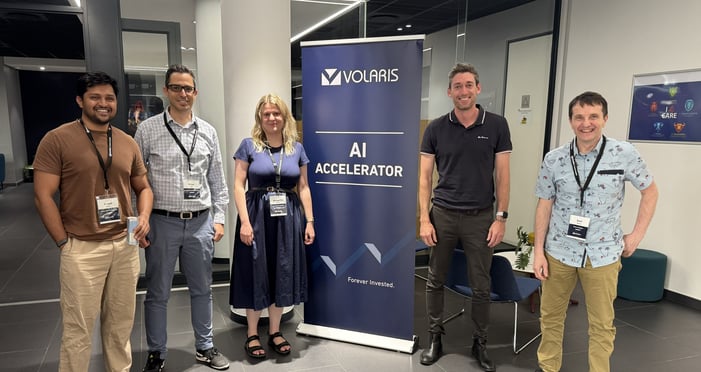
The Wisenet AI Accelerator team, from left: Senior developer Amjad Nazeer, Product Manager Erhan Halil, Technical and Delivery Lead Margarita (Rita) Ionova, Wisenet CEO Alister Smith, and Senior developer Emil Malinov
How does AI change the way we build software? What new value can it create for education providers? Here’s what we learned at an AI Accelerator in Johannesburg.
AI is here, and it’s changing everything. Our product, the way we support our customers; we're reshaping the business for that world, and it starts with understanding what education providers will need from us. Done well, that change is good news, and means less time on manual work, problems spotted sooner, and more time for learners.
From 9 to 13 November, Wisenet joined teams from 12 other Volaris businesses at the Volaris AI Accelerator, hosted at Adapt IT's campus in Johannesburg. The Wisenet team consisted of me, our product owner, and three of our senior developers, each of us ready to make success happen with AI.
The week ran in four tracks: general managers, product managers, developers, and HR. Each of us took a deep dive into our own individual tracks, and then we all came together on the final two days to share, discuss, and immediately put our learnings to use.
"I wanted to move from using AI as a coding assistant to treating it as part of how we deliver software." Amjad, Senior developer, Wisenet
Not a training course
The Accelerator wasn't about sitting through presentations. It was a boot camp: back-to-back, hands-on sessions working on our own projects, alongside developers from other software businesses who face many of the same challenges we do. Some of the best lessons came from swapping ideas and comparing notes on the problems we all share.
The week reinforced something we've always believed: good software starts with a clear understanding of the problem, not the technology. AI doesn't change that. It raises the stakes, because when you can build almost anything quickly, it's easy to build the wrong things faster.
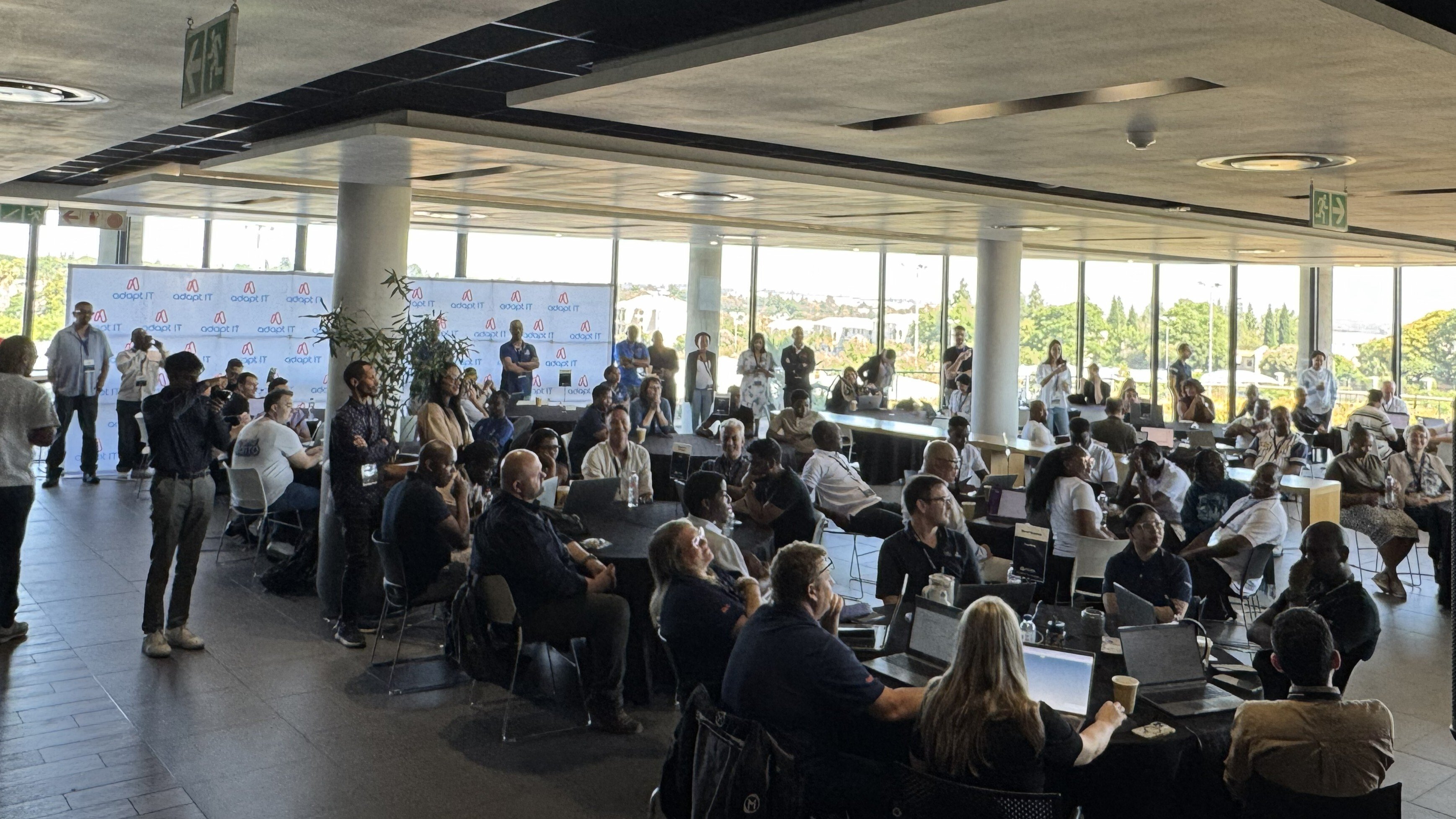
Preparing for solution pitch presentations at the Adapt IT Johannesburg campus.
From Conversations to Results
On the final two days, all four tracks came together for a capstone challenge. Using what we’d learned over the week, we had 24 hours to design and build a working AI prototype, and put it in front of real customers for feedback and iteration.
We started with a real problem our customers deal with every week: work that takes staff hours, where acting earlier makes a real difference to learners. During the build, we conducted customer interviews to validate our ideas, which then directly informed the shape our prototype would take.
Spread across Adapt IT's cafeteria and meeting rooms, 13 teams from across the world were hard at work. The challenge ran well into the evening, fuelled by pizza, energy drinks and healthy competition. Nobody needed reminding that the clock was ticking.
After a long night, we emerged with an early version of an AI assistant that works alongside provider staff to take on time-consuming checks, point out what needs attention and why, and then leave the final decision to a person.
In 24 hours, we went from a customer problem to something people could click on and react to. In just one day, we reframed how we think about the gap between an idea and a product.
"I was surprised by how much we could achieve in such a short time. Seeing multiple AI agents working on different parts of a solution simultaneously was impressive, although coordinating their work and bringing everything together was sometimes more challenging than expected." Margarita, Technical and Delivery Lead, Wisenet
We pitched our prototype to the Accelerator's AI coaches and got direct, practical feedback on what to sharpen. Seeing the other teams present was just as valuable. The ideas spanned many different industries, but the most useful part was seeing how each team used AI to rethink not just how customers use their product, but how those customers actually get their work done.
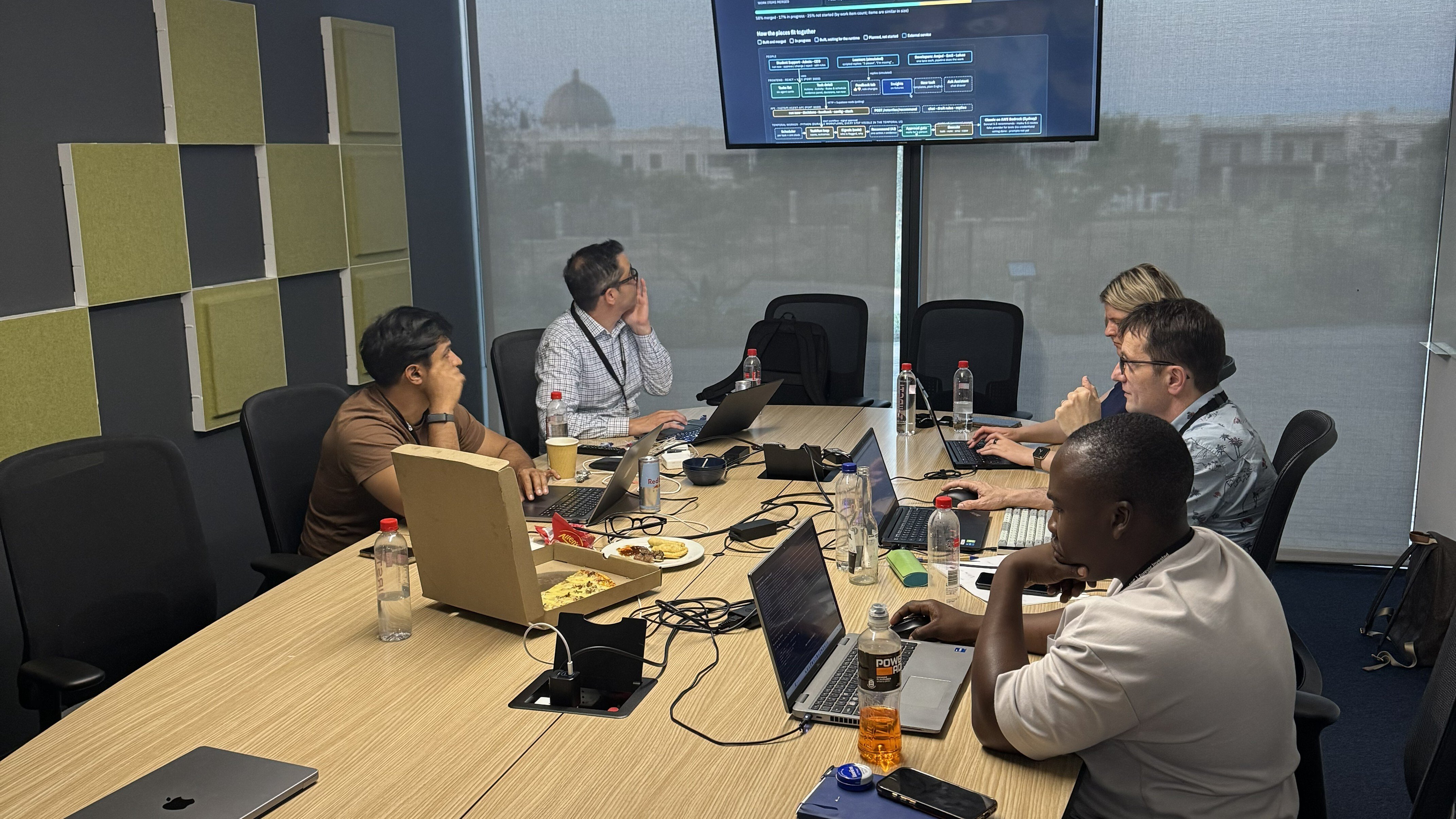
Hour 11 of the challenge. Pizza, energy drinks, and sugar.
A co-worker, not a replacement
AI is not replacing our developers, but instead changing where they spend their time. Less time writing routine code by hand, more time understanding the problem, more time designing the solution, and more time checking the quality of what gets built. AI speeds up the build while maintaining the safeguards; every change still passes human review and our release gates before it reaches customers.
The same applies to the people who use Wisenet. The assistant we built does the watching and the legwork, while key staff still make the decisions. That matters in education, where providers are accountable to regulators and hold sensitive information about every learner.
Wisenet is an ISO 27001 certified business, and AI gets the same care we bring to security and reliability today. In practice, this means keeping people in control, with AI providing suggestions while staff make the final decisions. Every suggestion comes with an explanation so it can be trusted or challenged, and customer data remains protected through safeguards built in from the start.
What it means for our customers
The biggest change is how early customers can be involved. Instead of describing an idea and asking you to imagine it, we can now put a working prototype in front of you quickly, see what lands and what doesn't, and then shape it together into a new feature.
But this week in Johannesburg only counts if it changes how we work back home. The Accelerator was about enablement, and now it’s about activation: sharing what we learned across the whole Wisenet team, building on what worked rather than starting from scratch, and turning it into real results for providers. We are already continuing the work, and will share more soon.
Looking ahead
No one should have to work through change this big on their own. For our customers, that is the role we play: working alongside providers as people who understand their world.
Volaris and Adapt IT play that role for Wisenet. Volaris buys businesses to hold them forever, and invests in their success. The banner in our team photo reads "Forever Invested", and sending five of us across the Indian Ocean for a week is exactly what that looks like.
We came home excited about what comes next, for Wisenet and for the providers we work with. AI will change a lot. Our job is to make sure it changes things for the better.